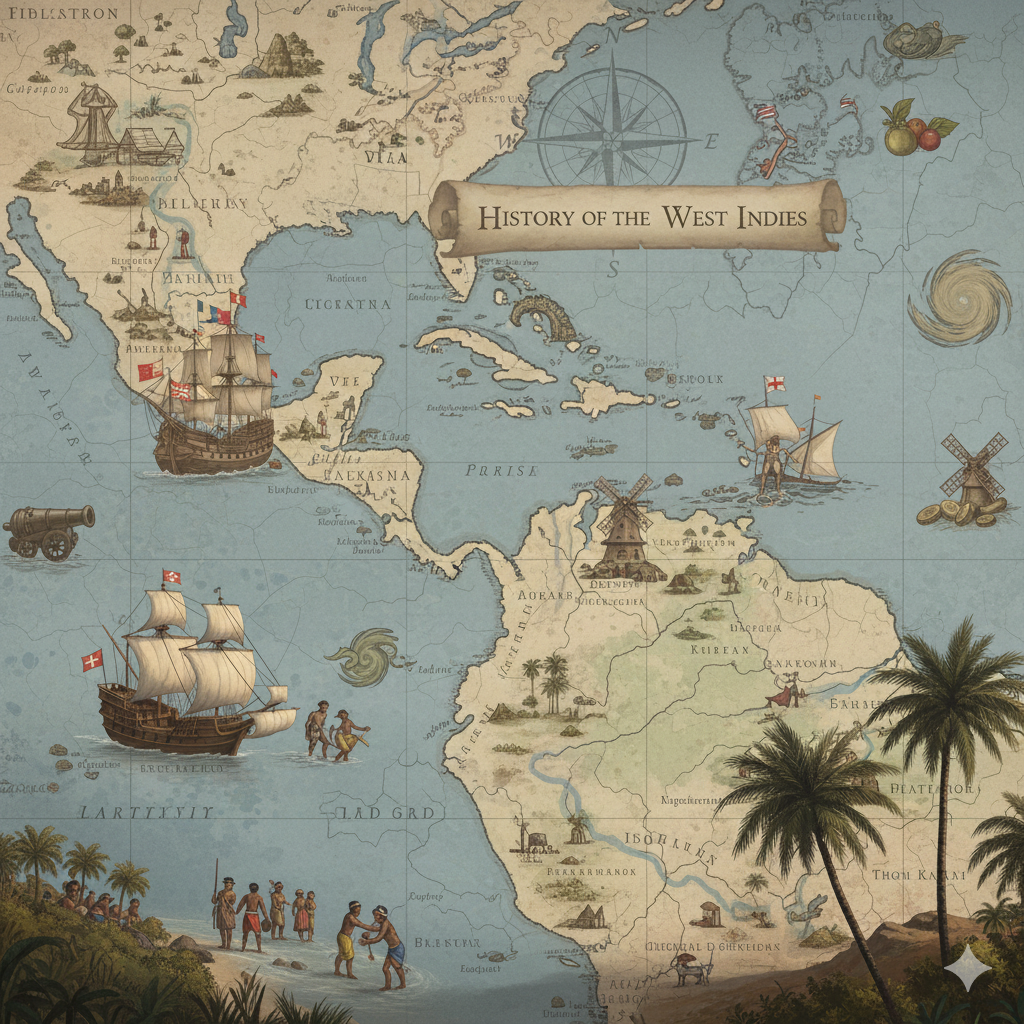
The history of the West Indies, or the Caribbean, is a complex and profoundly influential narrative, shaped by the collision of Indigenous cultures, European colonialism, the transatlantic slave trade, and the struggles for freedom and independence. Geographically, it encompasses the islands of the Caribbean Sea and the surrounding coasts. Its history is a microcosm of global interactions, marked by cycles of exploitation, resistance, and cultural synthesis.
 Pre-Columbian Era (Before 1492)
Long before the arrival of Europeans, the islands of the Caribbean were home to sophisticated Indigenous societies that had migrated from the mainland Americas.
The First Settlers
-
- Archaic Age (c. 5000 BCE – 200 BCE): The earliest inhabitants, often referred to as Ciboney or Guanahatabey, were migratory groups of hunter-gatherers, fishermen, and shell-collectors who arrived from the Yucatán Peninsula and Central America.
-
- Ceramic Age (c. 500 BCE – 1492 CE): This era saw the arrival of the Taino (Arawak) and the Kalinago (Carib) peoples, who were proficient in agriculture and pottery.
-
- Taino (Arawak): These groups settled the Greater Antilles (Cuba, Hispaniola, Jamaica, Puerto Rico) and the Bahamas. They lived in villages ruled by chiefs called caciques and developed a complex society centered on the cultivation of manioc (cassava), sweet potatoes, and maize. Their spiritual life involved the worship of deities called zemis.
-
- Kalinago (Carib): Predominantly settled the Lesser Antilles. Known for their seafaring prowess and resistance, they were in conflict with the Taino at the time of European arrival.
-
- Ceramic Age (c. 500 BCE – 1492 CE): This era saw the arrival of the Taino (Arawak) and the Kalinago (Carib) peoples, who were proficient in agriculture and pottery.
 The Age of European Conquest and Colonization (1492 – c. 1650)
The arrival of Christopher Columbus in 1492 marked the end of the Indigenous era and the beginning of the Spanish conquest.
Spanish Domination
-
- Initial Contact and Genocide: Columbus first landed on San Salvador in the Bahamas, then explored Hispaniola (Haiti/Dominican Republic) and Cuba. The Spanish established their first permanent settlement on Hispaniola.
-
- The Encomienda System: The Spanish crown instituted this system, which essentially enslaved the Taino population, forcing them to work in gold mines and on plantations. Brutal treatment, forced labor, and, most devastatingly, European diseases (like smallpox) led to the catastrophic depopulation of the Greater Antilles. The Indigenous population was virtually wiped out within a few generations.
-
- Focus Shift: By the mid-16th century, Spain’s focus shifted to the wealthier mainland empires of the Aztecs and Incas, leaving many of the smaller Caribbean islands vulnerable to other European powers.
The Rise of Rival European Powers
In the 17th century, the English, French, and Dutch began to challenge Spain’s claim to the region, settling the islands that Spain had neglected.
-
- English Settlements: Established colonies in St. Kitts (1624), Barbados (1627), and later, Jamaica (seized from Spain in 1655).
-
- French Settlements: Established colonies in Martinique and Guadeloupe (1635) and claimed the western third of Hispaniola (St. Domingue/Haiti).
-
- Dutch Settlements: Focused more on trading, establishing bases on islands like Curaçao and St. Eustatius, and parts of the mainland (Guyanas).
 The Sugar Revolution and Slavery (c. 1650 – 1800s)
The 17th century brought a profound economic and demographic transformation known as the Sugar Revolution, which cemented the Caribbean’s role in the global economy and necessitated the transatlantic slave trade.
The Transformation to Sugar
-
- Early Crops: Early European settlers initially grew tobacco and cotton, often with the labor of indentured servants from Europe.
-
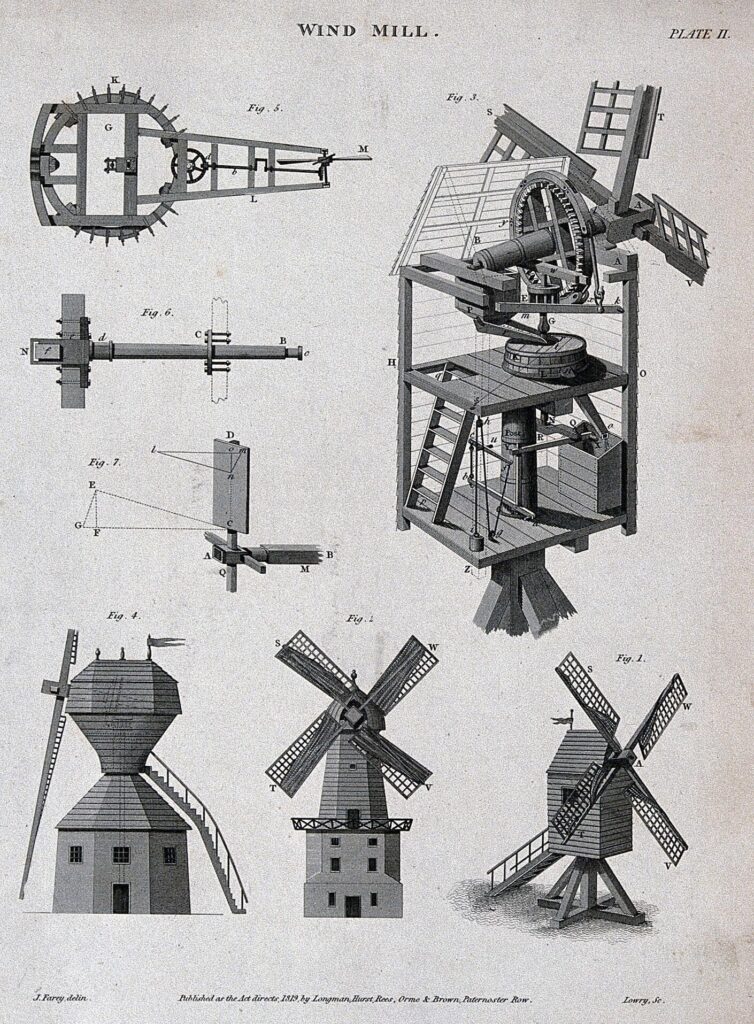
- The Introduction of Sugarcane: Sugarcane cultivation proved immensely profitable, particularly in Barbados, which was the first colony to fully commit to the crop. The scale and labor demands of sugar production (growing, harvesting, and processing in mills) were enormous.
-
- Monoculture Economy: Sugar rapidly became the monoculture crop of the islands, replacing diversified farming and leading to an overwhelming reliance on imported food. The islands became vital wealth-generators for their European owners.
The Atlantic Slave Trade
-
- Labor Shortage: The rapid decline of Indigenous populations and the insufficiency of indentured European labor created a massive demand for new workers.
-
- The Middle Passage: Millions of Africans were forcibly removed from West and Central Africa and transported across the Atlantic under horrific conditions. The Caribbean colonies, especially Jamaica and St. Domingue (French Haiti), received the largest number of enslaved people.
-
- Chattel Slavery: The system that developed was chattel slavery, where enslaved Africans and their descendants were considered property. Life on a sugar plantation was brutal, characterized by overwork, poor nutrition, disease, and constant violence. The system maintained itself through a constant influx of new captives and a codified, racist legal structure.
-
- Demographic Shift: The influx of enslaved Africans led to a rapid and dramatic demographic shift. In colonies like Barbados and Jamaica, the enslaved African population quickly outnumbered the white European population by a significant margin, creating a highly stratified and volatile society.
 Resistance, Rebellion, and Abolition (1700s – 1838)
The history of slavery is intrinsically linked with the history of resistance, which took many forms, from daily acts of sabotage to massive revolts.
Forms of Resistance
-
- Maroons: The most organized form of resistance was maroonage—the escape of enslaved people who formed independent communities (maroons) in the mountainous, remote, or swampy interiors of the islands.
-
- Jamaica: The Jamaican Maroons fought a series of wars against the British, eventually signing treaties (1739, 1795) that granted them internal autonomy in exchange for ceasing hostilities and helping to capture runaways.
-
- Suriname (Dutch Guiana): The Ndjuka and Saramaka maroons also formed powerful, successful societies.
-
- Maroons: The most organized form of resistance was maroonage—the escape of enslaved people who formed independent communities (maroons) in the mountainous, remote, or swampy interiors of the islands.
Revolts and Uprisings: Major revolts include:
-
- Tacky’s War (Jamaica, 1760): A large-scale revolt led by an enslaved man named Tacky, which severely shook the plantation system.
-
- The Bussa Rebellion (Barbados, 1816).
-
- The Baptist War/Sam Sharpe Rebellion (Jamaica, 1831–32): Led by the enslaved Baptist deacon Sam Sharpe, this was one of the largest and final revolts before abolition.
The Haitian Revolution (1791–1804)
The Haitian Revolution in the French colony of St. Domingue was the most significant event in Caribbean history.
-
- Trigger: Inspired by the French Revolution, the enslaved people of St. Domingue launched a massive, successful revolt.
-
- Key Leaders: Figures like Toussaint Louverture, Jean-Jacques Dessalines, and Alexandre Pétion led the enslaved armies to victory against the local planters, the French, the Spanish, and the British.
-
- Result: In 1804, Haiti declared independence, becoming the first free black republic in the world and the only successful slave revolt to result in the formation of a sovereign state. The revolution sent shockwaves through the slave-holding world and proved a powerful inspiration to enslaved people everywhere.
Abolition
-
- Abolition of the Slave Trade (1807): Britain banned the trading of enslaved people within its empire, a move driven by moral, economic, and political pressures.
-
- Abolition of Slavery (1833/1838): The British Parliament passed the Slavery Abolition Act in 1833. It stipulated a period of Apprenticeship from 1834 to 1838, where former slaves were still forced to work for their previous owners. Full emancipation was achieved in 1838, which is generally considered the true end of British Caribbean slavery.
 Post-Emancipation and Indentureship (1838 – c. 1945)
The post-slavery era was marked by economic restructuring, the introduction of new labor, and continued political and social control by the European powers.
Economic Challenges
-
- Labor and Land: Former plantation owners attempted to maintain control by restricting access to land and demanding exorbitant rents and wages. Many freed people left the plantations to form free villages and engage in peasant farming (cultivating ground provisions and small cash crops).
-
- Decline of Sugar: Without the forced labor of slavery, the cost of sugar production rose. Caribbean sugar faced increasing competition from beet sugar in Europe and cheaper cane sugar from other parts of the world. The economies of many islands stagnated and declined.
Indentured Immigration
To replace the freed labor and secure a reliable workforce, especially in colonies with large plantations like Trinidad and British Guiana (Guyana), European powers began importing indentured laborers.
-
- Indian Indentureship (1845–1917): The vast majority of these workers came from India, with significant numbers also arriving from China, Portugal (Madeira), and Java (Indonesia). They signed contracts for a period of service (typically five years) in exchange for passage, a small wage, and the option for a return passage or a plot of land after their term.
-
- Cultural and Demographic Impact: This immigration fundamentally changed the demographic and cultural landscape of the Caribbean, particularly in Trinidad and Guyana, where Indo-Caribbean communities are now a major part of the population.
Political and Social Structure
-
- Crown Colony Government: The post-emancipation period saw the transition from local Assemblies (controlled by white planters) to Crown Colony rule, where the governors were directly appointed by the British Monarch. While seemingly more stable, this limited the political participation of the majority population.
-
- World Wars and Influence: The two World Wars disrupted trade but also brought the Caribbean into closer contact with the outside world, notably the United States, which leased military bases on several islands during World War II, further eroding British influence.
 Decolonization and Independence (c. 1945 – Present)
The mid-20th century was defined by the rise of nationalism, the push for self-governance, and the eventual dismantling of the colonial structure.
The Rise of Nationalism
-
- Labor Movements: Economic hardship in the 1930s led to widespread labor riots across the region (1935–1938). These riots spurred the formation of powerful trade unions and, from them, modern political parties.
-
- Key Leaders: New charismatic leaders emerged from these movements:
-
- Sir Alexander Bustamante and Norman Manley (Jamaica)
-
- Eric Williams (Trinidad and Tobago)
-
- Grantley Adams (Barbados)
-
- Key Leaders: New charismatic leaders emerged from these movements:
The West Indies Federation (1958–1962)
-
- A British-sponsored attempt to unite ten English-speaking territories into a single, independent political entity.
-
- Failure: The Federation collapsed due to conflicts over taxation, the structure of the central government, and the fear of domination by the larger islands. Its dissolution led the major colonies to seek independence individually.
Independence
-
- 1962: Jamaica and Trinidad and Tobago were the first to gain full independence.
-
- 1960s & 1970s: Barbados, Guyana, Bahamas, Grenada, and others followed suit.
-
- OECS Nations (1970s & 1980s): The smaller islands of the Eastern Caribbean (e.g., St. Vincent, St. Lucia) achieved independence later.
-
- Remaining Territories: Some islands remain as overseas territories of their former colonial powers (e.g., Puerto Rico and the US Virgin Islands, Guadeloupe and Martinique as French départements, and the British Overseas Territories).
Contemporary Caribbean
Since independence, the region has faced challenges in diversifying its economies, managing debt, and coping with the threats posed by globalization and climate change (hurricanes, sea-level rise).
-
- Economic Drivers: Modern Caribbean economies rely heavily on tourism, offshore finance, and bauxite/oil/gas (in specific countries).
-
- Regional Integration: Organizations like CARICOM (Caribbean Community) and the OECS (Organisation of Eastern Caribbean States) work to foster economic and political integration.
-
- Cultural Identity: The independent Caribbean has seen a flowering of unique cultural expressions, including Reggae (Jamaica), Calypso/Soca (Trinidad), and distinct literary traditions (e.g., Nobel laureates Derek Walcott and V.S. Naipaul).
 Conclusion
The History of the West Indies is a testament to resilience. From the Spanish conquest and the subsequent demographic erasure of the Taino, through the brutal centuries of the Sugar Revolution and African enslavement, to the transformative success of the Haitian Revolution and the eventual achievement of political independence, the region has been defined by struggle and cultural creation. Today, the Caribbean is a vibrant tapestry of African, Indigenous, European, and Asian influences, a complex legacy born from the global forces that first collided on its shores over five centuries ago.
Visit : www.dkbtech.com and allcircular.com